
 By
By 
Graphic facilitation brings together visual thinking and collaborative communication to help teams see ideas more clearly. It includes a wide range of creative services, from strategic infographics and facilitated workshops to live illustration during meetings and events. These hand-drawn visuals transform conversations into shared understanding and make complex topics easier to grasp.
No matter an organization’s goals or challenges, graphic recording offers a powerful way to support communication, engagement, and alignment. By making ideas visible, teams can collaborate more effectively, stay focused, and move forward with greater clarity and confidence.
How Visual Thinking Supports Organizations
Working with a visual thinking partner helps organizations communicate ideas in a clearer and more engaging way. Visuals simplify complex messages, making them easier to understand and remember for employees, clients, and partners alike.
Beyond clarity, visual thinking enhances overall experience. It helps organizations stand out, strengthens connections, and ensures that important messages are not only shared but truly understood.
A Tool for Leaders and Decision-Makers
Graphic facilitation is often used by leaders and stakeholders to support communication, systems thinking, and decision-making. Visuals help leaders see how ideas connect and where challenges or opportunities may lie.
By translating conversations into visual form, leaders gain a clearer overview of complex discussions. This shared visual reference supports alignment, encourages collaboration, and leads to more informed decisions.
Supporting Systems Thinking Through Visuals
Graphic recording during leadership meetings enables systems thinking by visually connecting ideas, themes, and relationships that emerge in conversation. Seeing these connections helps teams understand how different elements influence one another.
When parts of a system are drawn and linked together, causes and potential solutions become more visible. This clarity helps teams move beyond surface-level discussions and address root issues more effectively.
Brainstorming and Idea Generation
One of the most familiar uses of visual facilitation is brainstorming. Visuals help capture ideas as they emerge, making abstract thoughts tangible and easier to build upon.
A skilled visual facilitator not only illustrates ideas but organizes them in real time. This structure helps teams see patterns, refine concepts, and move from scattered thoughts toward actionable solutions.
Mapping Strategy Visually
Visual strategy maps provide a clear picture of goals, priorities, and next steps. They help teams align around a shared direction and understand how individual actions contribute to broader objectives.
These maps can be shared with stakeholders or used internally as a motivating reference point. As living visuals, they keep teams focused and inspired as strategies evolve.
Identifying Challenges Through Visual Records
Graphic records of conversations and workshops make it easier to spot challenges, gaps, and recurring themes. Seeing the discussion laid out visually often reveals insights that might otherwise be missed.
Visual records encourage reflection and deeper analysis. They help teams identify what is missing, what needs attention, and where adjustments are necessary to move forward successfully.
Visualizing Goals Clearly
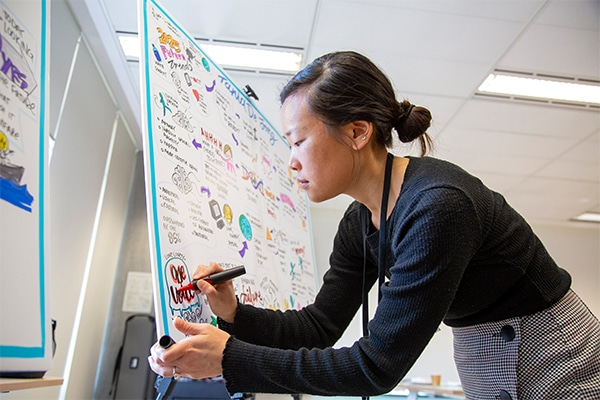
Visual facilitation allows teams to quite literally see their goals. By creating visual summaries or vision boards, teams gain a concrete representation of where they are heading.
These visuals align everyone around a shared future and serve as a constant reminder of objectives. They act as motivating reference points that guide daily actions and long-term planning.
Supporting People Practices and Internal Communication
Graphic facilitation tools support strong people practices by improving internal communication and employee experience. Visual notes can replace lengthy messages with clear, engaging summaries.
Instead of dense text updates, teams can share colorful visuals that communicate key information quickly. This approach increases engagement and reduces misunderstandings.
Explaining Policies and Procedures Visually
Complex policies and procedures become more accessible when illustrated visually. Visual summaries break down processes into clear, easy-to-follow steps.
Because many people are visual learners, illustrated guides are often more engaging and memorable. They help ensure important information is understood and applied correctly.
Enhancing Training and Development Materials
Visuals can significantly improve training and development materials. Illustrated content highlights key takeaways and makes learning more engaging.
Anchoring information with visuals supports retention and understanding. This makes training sessions more effective and enjoyable for participants.
Celebrating Success and Achievements
Custom visuals are a powerful way to celebrate milestones, achievements, and success stories. Visual summaries bring positive news to life and make it more shareable.
These visuals can be displayed in the workplace or shared with partners and clients. They reinforce appreciation and strengthen a sense of accomplishment and connection.
Visual Journey Mapping
Visual journey maps show where an organization has been, where it is going, and how it plans to get there. They provide a shared understanding of progress and direction.
By making journeys visible, teams gain clarity on experiences, transitions, and goals. This supports alignment and long-term planning across the organization.
Enhancing Marketing and Public Presence
Graphic facilitation adds a distinctive dimension to marketing and public communication. Hand-drawn visuals help messages stand out and capture attention.
Visual storytelling makes complex information more accessible and engaging. These visuals invite audiences to connect with the story being told.
Live Event Illustration
Live illustration captures discussions and presentations as they happen, transforming events into lasting visual summaries. These visuals reflect key ideas in real time.
They provide immediate value during events and long-term value afterward as reference materials. Live visuals help extend the impact of meetings and gatherings.
Creating Meaningful Visual Takeaways
Unique visual takeaways offer a memorable way to connect with partners and clients. Personalized graphics stand out and leave a lasting impression.
These visuals serve as thoughtful reminders of collaboration and shared experiences. They reinforce relationships and help organizations be remembered.
Conclusion
Graphic recording and facilitation open up new possibilities for communication, collaboration, and engagement. By making ideas visible, organizations gain clarity, alignment, and momentum in their work.
The potential uses of visual facilitation are vast. When thoughtful, hand-drawn visuals are introduced into an organization, they often feel refreshing and human—bringing new energy, insight, and connection to everyday work.







Comments