
 By
By 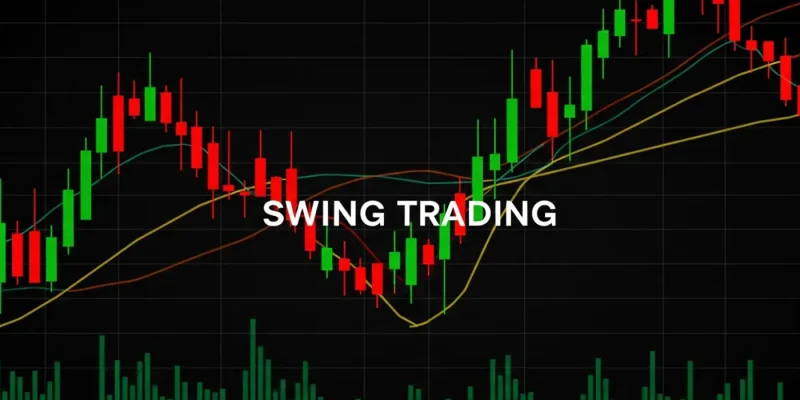
Swing trading occupies a distinctive space between long-term investing and short-term day trading. It aims to capture meaningful price movements over several days or weeks, allowing traders to participate in trends without the constant screen time demanded by intraday strategies. For many UK traders, swing trading offers a pragmatic balance: enough activity to exploit market inefficiencies, yet sufficient breathing room to manage risk thoughtfully.
That balance, however, does not come from intuition alone. Consistent swing trading performance is built on structured frameworks that integrate market context, timing precision, and disciplined risk management.
Multi-Timeframe Momentum: Aligning Structure and Timing
Momentum is a core driver of swing trading opportunities, but it rarely manifests uniformly across timeframes. A move that appears impulsive on a daily chart may be nothing more than noise within a broader weekly range. Conversely, a short-term pullback may represent an attractive entry point when viewed in the context of a higher-timeframe trend.
Multi-timeframe momentum analysis addresses this by separating market structure from execution. Higher timeframes, such as weekly or daily charts, are typically used to identify the dominant trend and directional bias. Lower timeframes, such as four-hour or hourly charts, then help refine entries by highlighting momentum shifts, consolidations, or breakouts.
This top-down approach reduces the likelihood of trading against prevailing market forces. By aligning shorter-term signals with higher-timeframe momentum, swing traders improve the probability that price movements will extend far enough to justify the trade’s risk.
Mean Reversion as a Complementary Framework
While momentum drives many swing trades, markets also exhibit a tendency to revert towards equilibrium after extended moves. Mean reversion strategies aim to exploit this behaviour by identifying conditions where the price has temporarily diverged too far from its average or perceived fair value.
In swing trading, mean reversion is often applied within broader trends rather than against them. For example, in an established uptrend, pullbacks towards moving averages or prior support zones may offer favourable entry points. These setups combine the stabilising effect of the larger trend with the tactical advantage of buying weakness or selling strength.
Indicators such as relative strength, moving average envelopes, or volatility bands can help quantify overextension. However, mean reversion works best when supported by contextual analysis. Markets can remain overbought or oversold longer than expected, particularly during strong trends, making risk control essential.
Integrating Momentum and Mean Reversion
Rather than viewing momentum and mean reversion as opposing philosophies, many effective swing trading frameworks integrate both. Momentum defines the direction of participation, while mean reversion informs the timing.
For instance, a trader may use daily momentum to determine whether to focus on long or short opportunities, then wait for a counter-trend pullback on a lower timeframe before entering. This integration improves entry efficiency and often enhances risk–reward characteristics by allowing tighter stop placement without sacrificing directional alignment.
Such frameworks are adaptable across asset classes, including equities, indices, FX, and commodities. The underlying logic remains consistent even as market-specific nuances are introduced.
Risk–Reward Optimisation as a System Constraint
Risk–reward optimisation is not an afterthought in swing trading frameworks; it is a design constraint. Because swing trades aim to capture moves larger than intraday fluctuations, the relationship between potential reward and defined risk must justify holding positions through overnight sessions and news events.
Professional swing traders often predefine a minimum acceptable reward-to-risk ratio before entering a trade. This discipline filters out marginal setups and focuses attention on opportunities where the market structure offers asymmetry. Importantly, this does not mean every trade will achieve its target, but over a large sample, favourable risk–reward profiles help offset inevitable losses.
Stop placement, position sizing, and profit targets are all interdependent. A tighter stop may improve the reward-to-risk ratio but increase the probability of being stopped out. Conversely, a wider stop may reduce trade frequency but improve durability. Effective frameworks balance these trade-offs systematically rather than emotionally.
Position Management and Partial Exits
Swing trading frameworks often extend beyond entry and exit into dynamic position management. Partial profit-taking, trailing stops, or time-based exits can help manage uncertainty once a trade is active.
For example, reducing position size after an initial price objective is reached can lock in gains while preserving upside exposure. Trailing stops aligned with evolving market structure allow traders to participate in extended moves without predefined ceilings. These techniques transform trades from binary outcomes into managed processes.
Such flexibility is particularly valuable in swing trading, where holding periods expose positions to changing volatility and sentiment. A framework that anticipates this variability is more resilient than one reliant on static assumptions.
Conclusion
Swing trading is often described as an art, but consistent results are more closely associated with structure than intuition. Frameworks built on multi-timeframe momentum, selective mean reversion, and disciplined risk–reward optimisation provide that structure.
For UK traders navigating diverse and often volatile markets, such frameworks offer clarity amid uncertainty. They shift focus away from prediction and towards process, where each trade is a calculated expression of risk rather than a hopeful guess.
Over time, it is this emphasis on repeatable logic—rather than individual outcomes—that enables swing traders to compound skill, confidence, and capital sustainably.








Comments