
 By
By 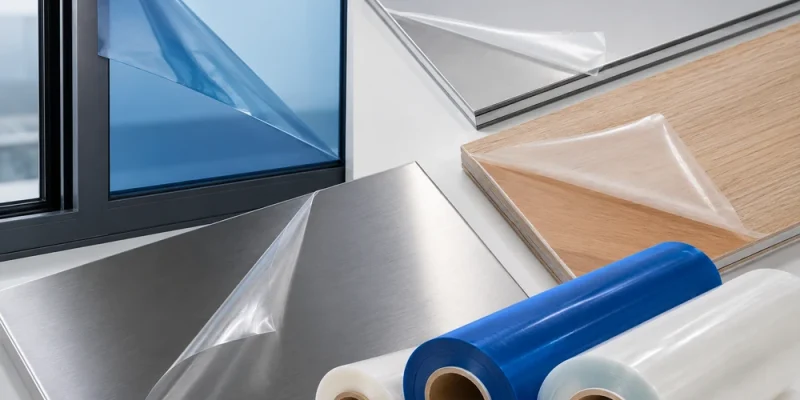
In today’s competitive manufacturing environment, surface protection is no longer a one-size-fits-all solution. Different materials, surface finishes, and application conditions require customized temporary protection films to ensure optimal performance.
Whether you are working with aluminum profiles, stainless steel, glass, or plastic surfaces, customizing the right protective film can significantly reduce damage, improve efficiency, and enhance your product quality.
This guide will walk you through how to customize temporary protection film for your business step by step.
1. Understand Your Application Requirements
Before customizing a protective film, you must clearly define your application scenario.
Key questions to consider:
- What material are you protecting? (aluminum, stainless steel, glass, plastic, etc.)
- Is the surface smooth, coated, or textured?
- What stage needs protection? (manufacturing, transport, installation)
- Indoor or outdoor use?
Why this matters:
Different surfaces require different adhesion levels and film properties. For example:
- Smooth stainless steel → low or medium adhesion
- Textured aluminum → medium or high adhesion
- Outdoor applications → UV-resistant film
💡 Tip: Always match the film to the surface, not the other way around.
2. Choose the Right Base Film Material
The base film determines the mechanical performance of the protective film.
Common material options:PE (Polyethylene) Film
Best for:
- Aluminum profiles
- Stainless steel sheets
- Plastic surfaces
Advantages:
- Flexible and easy to apply
- Cost-effective
- Excellent conformability
PET (Polyester) Film
Best for:
- Glass
- High-gloss surfaces
- Electronics and displays
Advantages:
- High strength and durability
- Excellent transparency
- Superior scratch resistance
Selection Summary:
- Choose PE protection film for flexibility and cost efficiency
- Choose PET protection film for strength, clarity, and premium applications
3. Customize Adhesion Level (Critical Step)
Adhesion is the most important parameter in protective film performance.
It is typically measured using a 180° peel test, expressed in Newtons (N).
Common adhesion ranges:
- Low Tack (0.2-2 N) → smooth surfaces
- Medium Tack (2-4 N) → coated or semi-smooth surfaces
- High Tack (4-10 N) → rough or textured surfaces
- Ultra-High Tack (10-20 N) → very rough surfaces
How to choose:
- Too low → film may fall off
- Too high → residue or difficult removal
💡 Best practice: Always test adhesion on your actual substrate before mass production.
4. Select Film Thickness
Film thickness affects protection strength and handling performance.
Typical thickness range:
- 30-50 μm → light protection (scratch prevention)
- 50-80 μm → general-purpose protection
- 80-150 μm+ → heavy-duty protection
Considerations:
- Thicker films = better impact resistance
- Thinner films = better flexibility and cost savings
5. Decide Film Color and Surface Finish
Customization is not just technical-it also supports branding and usability.
Common color options:
- Transparent (easy inspection)
- Blue (most common industrial use)
- White / Black (UV resistance)
- Custom colors
Surface finishes:
- Glossy → clear visibility
- Matte → reduces glare
- Embossed → anti-slip and bubble-free application
6. Add Custom Printing (Branding & Instructions)
Custom printing transforms protective film into a marketing and operational tool.
What you can print:
- Company logo
- Installation instructions
- Warning messages
- Product identification
Benefits:
- Enhances brand visibility
- Reduces installation errors
- Improves professionalism
💡 Many manufacturers support up to 8-color printing for high-quality customization.
7. Define Roll Specifications
Your film should match your production process.
Key parameters:
- Roll width (based on product size)
- Roll length (efficiency vs handling)
- Core size (machine compatibility)
Why it matters:
Proper roll sizing improves:
- Production efficiency
- Application speed
- Waste reduction
8. Consider Environmental and Performance Requirements
Different environments require specialized film properties.
Important features:
- UV resistance → outdoor use
- Temperature resistance → extreme conditions
- Moisture resistance → humid environments
- Clean removal → no residue after peeling
9. Conduct Testing and Validation
Customization is not complete without testing.
Recommended tests:
- Peel strength test (180°)
- Aging test (temperature & humidity)
- UV exposure test
- Residue check after removal
💡 Testing ensures the film performs consistently across real-world conditions.
10. Work with a Professional Manufacturer
A reliable manufacturer is more than a supplier-they are your technical partner.
What to look for:
Why it matters:
Strong technical support helps you:








Comments